
You do not need a huge channel, expensive kit, or a polished presenter voice to make affiliate marketing for beginners YouTube content work. What you do need is a simple plan: choose offers people already want, create videos that answer real questions, and give viewers an easy next step. That is where most beginners go wrong. They either obsess over subscribers or post random videos with no clear offer behind them.
YouTube can be one of the best starting points for affiliate marketing because people arrive with intent. They are not just scrolling to kill time. They are searching for answers, comparisons, tutorials, and honest opinions before they spend money. If you can show up in those moments with helpful content, you have a real chance of earning commissions without needing a massive audience.
Why affiliate marketing for beginners YouTube works
For a beginner, YouTube has one major advantage over many other traffic sources: content can keep working long after you publish it. A social post might disappear in a day. A useful YouTube video can bring views for months, sometimes years, if the topic solves an ongoing problem.
It also suits beginners because you do not have to create clever entertainment. In most cases, simple is better. People looking up email marketing tools, beginner funnels, landing page builders, keyword tools, or side hustle training are usually not expecting cinematic production. They want clarity. They want to know what works, what it costs, and whether it is suitable for someone starting from scratch.
That said, YouTube is not magic. It can be slower than paid traffic, and if you pick the wrong topics, you can spend weeks making videos nobody searches for. The opportunity is real, but the method matters.
Start with the right offer, not the camera
A lot of beginners do this backwards. They start filming before they know what they are promoting. That usually leads to vague videos with no commercial direction.
A better approach is to pick one type of offer first. For beginners, that is often a low-cost tool, beginner training, software trial, or subscription product with a clear use case. These are easier to explain on video than complex high-ticket schemes, and they tend to convert better from YouTube because the viewer can quickly understand the value.
The strongest offers usually fit one of three categories. They help people get traffic, build a list, or set up a simple funnel. Those are practical problems, and practical problems make good video topics.
If you choose an offer that is too broad or too hype-driven, your content becomes harder to trust. Viewers on YouTube are surprisingly good at spotting when someone is simply pushing a product. If your recommendation feels grounded and useful, you stand a better chance.
What videos should beginners make?
The easiest place to start is with search-based content. Instead of asking, “What do I want to say?” ask, “What is a beginner already typing into YouTube?” That shift alone can save a lot of wasted effort.
Good beginner-friendly formats include product reviews, tutorials, comparisons, case-study style updates, and problem-solving videos. A review works well when people are already considering a tool. A tutorial works better when they need help using something. A comparison is useful when they are stuck between two options.
For example, someone might search for how to start affiliate marketing with no website, best email tool for beginners, or how to get approved for affiliate offers. Those are strong topics because the intent is obvious. The person wants a solution, not just inspiration.
There is also a big difference between broad and focused videos. “How to make money online” is highly competitive and vague. “How to promote affiliate offers on YouTube without showing your face” is much clearer and often more achievable for a newer channel.
Your content does not need to be fancy
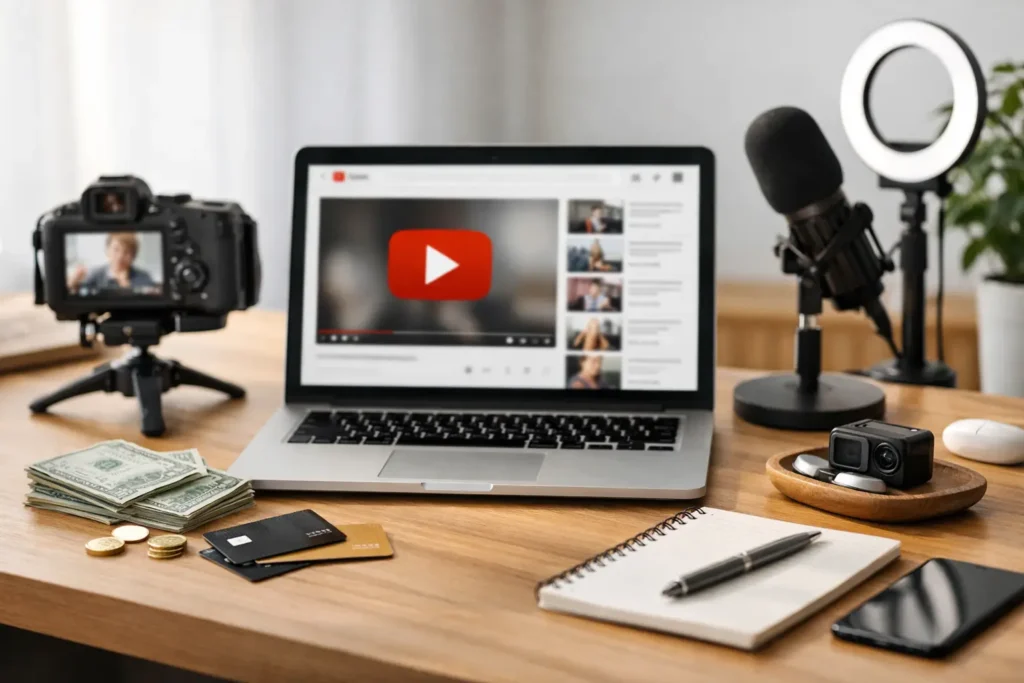
This is where many people stall. They assume they need a DSLR camera, studio lighting, custom graphics, and a perfect background. In reality, some of the most effective beginner affiliate videos are screen recordings with a calm voiceover and a clear explanation.
If you can show the tool, explain who it is for, mention the pros and cons, and help someone decide whether to use it, you are already ahead of a lot of channels.
There are a few trade-offs. Face-to-camera videos can build trust faster because viewers feel they know you. Screen-based videos are easier and quicker to produce, especially if you are shy or not ready to be on camera. Neither is automatically better. It depends on your confidence, your niche, and the kind of content you are making.
The important thing is consistency and usefulness, not production perfection.
How to make videos that actually convert
Views are nice, but clicks and commissions matter more. That means your video needs a simple conversion path.
First, match the video to the offer. If the video is about building an email list, the affiliate offer should help with email capture, autoresponders, landing pages, or beginner funnel setup. If the offer feels disconnected, people will not click.
Second, be specific about the benefit. Instead of saying a tool is “amazing”, explain what it helps a beginner do by tonight or by the end of the week. Clear outcomes beat vague praise every time.
Third, give a realistic call to action. You do not need to sound pushy. You can simply tell viewers where to find the tool or training mentioned and what they should expect from it. When your content has done the job properly, that next step feels natural.
A useful rule is this: teach enough to build trust, but leave the tool to do the heavy lifting. If you explain the problem well and show why the offer helps solve it, the click becomes much easier.
Common mistakes beginners make on YouTube
One of the biggest mistakes is promoting too many offers too early. If every video points to a different shiny object, your channel starts to feel scattered. A tighter theme builds stronger trust and makes your recommendations more believable.
Another mistake is choosing topics based only on commission size. High-ticket products can look exciting, but they are often harder to sell, harder to explain, and sometimes harder to get approved for. A lower-priced offer with strong demand can be a much better starting point.
Beginners also underestimate how much titles and thumbnails matter. You can make a genuinely useful video, but if the title is weak, very few people will click. Keep your titles clear and direct. Promise a specific outcome or answer a clear question.
Then there is the issue of patience. YouTube often rewards steady publishing rather than quick bursts of activity. If you upload three videos, get few views, and quit, you have not really tested the platform.
Do you need an email list as well?
Strictly speaking, no. You can send viewers directly from YouTube to an offer. But in most cases, building a list is the smarter long-term move.
An email list gives you a second chance if the viewer is interested but not ready to buy that day. It also protects you from relying only on YouTube traffic. Platforms change, rankings shift, and video performance can be unpredictable. Your list gives you more control.
For beginners, the simplest setup is often YouTube video, lead magnet or helpful free training, then a short follow-up email sequence that introduces the affiliate offer properly. This does add an extra step, so it is not always the fastest route. But it usually builds more stable results over time.
That practical, low-cost system is far more reliable than chasing flashy shortcuts. It is one of the reasons blogs like Andy Smith’s continue to focus on simple funnels and beginner-friendly tools rather than overcomplicated promises.
What kind of results should you expect?
This depends on your niche, your consistency, your offers, and how well your videos match buyer intent. Some beginners get their first commission with only a handful of videos. Others need a few months before things start moving.
The good news is you do not need millions of views. A small channel can still earn if its videos target the right searches and recommend relevant offers. Ten targeted views from people actively looking for a tool can be worth more than a thousand casual views from the wrong audience.
Treat your first phase as skill-building. You are learning how to pick offers, spot search intent, make clearer videos, write better titles, and guide viewers towards the next step. Those skills compound.
If you stay realistic and keep improving, YouTube can become more than a side experiment. It can turn into a steady source of affiliate traffic that keeps working in the background while you build your list, test new offers, and grow a proper online business.
Start simple, stay useful, and make videos that solve one problem at a time. That is usually where the first commission begins.